





.svg)

PSA Media

September 22, 2026


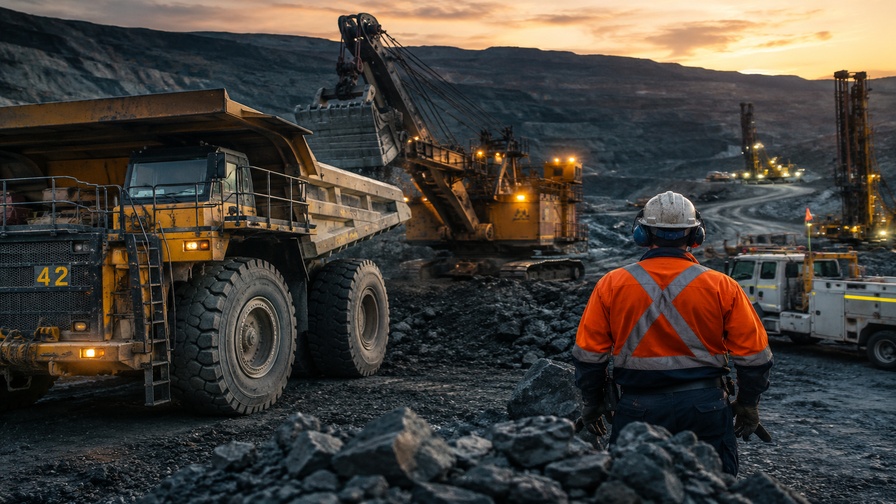
There is a major difference between an ERP provider that understands software and an ERP provider that understands mining.
On the surface, many ERP implementations can look similar. The platform gets deployed, workflows are configured, dashboards are built, and reporting structures are put into place. But once the system begins interacting with the realities of daily operations, the gap between technical knowledge and true industry understanding becomes painfully obvious.
Mining companies do not operate in controlled, predictable environments. They manage complex supply chains across remote locations, coordinate maintenance schedules that directly affect production, navigate contractor and compliance requirements, balance fluctuating commodity pressures, and make operational decisions where timing can have significant financial consequences. Even something as simple as inventory visibility can become critical when a delayed part has the potential to impact uptime across an operation.
That is why mining organizations cannot afford to approach ERP as simply another technology project. The success of an ERP environment depends heavily on whether the people implementing it actually understand how mining businesses function in the real world.
Too many organizations have experienced the frustration of working with consultants who may understand ERP platforms extremely well, but who have never truly operated within the pressures of mining. The conversations become overly theoretical. Processes are designed in ways that look clean in workshops but create friction once they reach site teams. Reporting structures may satisfy corporate requirements while completely missing the operational visibility frontline teams actually need to make decisions quickly and confidently.
What ultimately happens in many of these environments is predictable. Teams begin working around the ERP instead of through it. Spreadsheets return. Manual approvals appear. Emails become the operational glue holding disconnected processes together. Visibility suffers, adoption declines, and leadership starts questioning why such a large investment is not producing the operational improvements they expected.
The issue is rarely the ERP platform itself. More often, the issue is that the implementation was never grounded in operational reality. That reality is exactly why industry experience matters so much when selecting an ERP partner for mining. At PSA, mining is not treated as just another vertical added onto a generic ERP business model. The company’s approach has been shaped by people who understand the operational side of mining, people who have seen firsthand how decisions made in the boardroom impact execution at the site level, and how disconnected systems can quietly create inefficiencies that compound over time.
That operational understanding changes the nature of the conversation from the very beginning. Instead of approaching projects as purely technical deployments, PSA works with mining organizations from the perspective of operational performance. The discussion moves beyond simply implementing software and focuses on how systems can better support maintenance planning, procurement visibility, inventory control, operational coordination, production reporting, and the movement of work across the business. That distinction matters because mining companies are not looking for software for the sake of software. They are looking for better operational outcomes.
When an ERP provider understands mining, they understand that downtime is not just an inconvenience. They understand that maintenance workflows cannot exist in isolation from inventory availability. They understand that procurement delays have ripple effects across operations. They understand that field teams need systems that support execution rather than slowing it down with unnecessary administrative complexity. Most importantly, they understand that operational trust is earned. Site teams adopt systems when those systems make their jobs easier, provide clearer visibility, and reflect how work actually gets done. They resist systems that feel disconnected from operational reality. That is one of the biggest reasons why mining expertise becomes such a critical advantage during ERP projects. It allows implementations to be built around the realities of the business instead of forcing the business to adapt itself around rigid software structures.
The impact of that experience becomes visible throughout the lifecycle of an ERP environment. Discovery conversations become more productive because less time is spent explaining basic operational concepts. Workflow design becomes more practical because the implementation team already understands the dependencies between departments. Reporting structures become more meaningful because they are tied to operational decision making rather than generic KPI templates. Even change management improves because users recognize that the people guiding the project understand the pressures they deal with every day. For mining organizations, this often creates a very different implementation experience entirely. Rather than feeling like technology is being imposed onto operations, the ERP begins functioning as an extension of the operation itself. That is ultimately where the real value of ERP exists.
The best ERP environments are not simply systems of record. They become operational platforms that create clarity across the business. They help leadership understand where bottlenecks are forming, where accountability is breaking down, where approvals are slowing execution, and where operational inefficiencies are quietly increasing costs. As mining organizations continue evolving, that operational visibility is becoming increasingly important. Companies are under pressure to move faster, operate leaner, improve coordination across teams, and make better decisions with greater confidence. At the same time, many operations are dealing with aging systems, fragmented workflows, disconnected data, and processes that were never designed to support modern operational demands.
That is why ERP conversations across the mining industry are beginning to evolve beyond implementation alone. Organizations are now looking at how systems connect execution, visibility, automation, accountability, and decision making together across the business. They are asking how workflows move between departments, how operational intelligence can become more accessible, and how technology can support both frontline execution and executive visibility simultaneously.
Those are not conversations that can be solved through generic ERP thinking. They require partners who understand the mining industry deeply enough to recognize where operational friction actually exists. At PSA, that understanding has become a foundational part of how the company approaches ERP and operational transformation. The focus is not simply on deploying systems. The focus is on helping mining organizations operate more effectively, with better visibility, stronger coordination, and technology environments designed around the realities of mining operations rather than abstract software theory. Because at the end of the day, mining companies are not investing in ERP simply to modernize their technology stack. They are investing in their ability to execute better as a business. And that only happens when the partner sitting across the table truly understands the industry they are helping transform.
.png)

.png)
.png)
Stay ahead of the curve with real-world insights, tips, and stories from the frontlines of ERP in mining and beyond. Follow us on LinkedIn and join the conversation.
.png)
Just Now
.svg)
Maecenas bibendum rhoncus tellus facilisis. Dui ut risus vel ridiculus arcu cursus. Lectus eget a non nulla Dui ut risus.
.png)
.png)
Just Now
Maecenas bibendum rhoncus tellus facilisis. Dui ut risus vel ridiculus arcu cursus. Lectus eget a non nulla Dui ut risus.
.png)
.png)
Just Now
Maecenas bibendum rhoncus tellus facilisis. Dui ut risus vel ridiculus arcu cursus. Lectus eget a non nulla Dui ut risus.
Just Now
Maecenas bibendum rhoncus tellus facilisis. Dui ut risus vel ridiculus arcu cursus. Lectus eget a non nulla Dui ut risus.
Just Now
Maecenas bibendum rhoncus tellus facilisis. Dui ut risus vel ridiculus arcu cursus. Lectus eget a non nulla Dui ut risus.
Just Now
Maecenas bibendum rhoncus tellus facilisis. Dui ut risus vel ridiculus arcu cursus. Lectus eget a non nulla Dui ut risus.
PSA brings mining fluency, structured implementation, and global capability to ensure your system performs under pressure.
Make the right move. We’re ready when you are.
© 2026 Pronto Solutions Alliance Inc.Privacy Policy



.svg)
